23.8.13

noises


ALIS


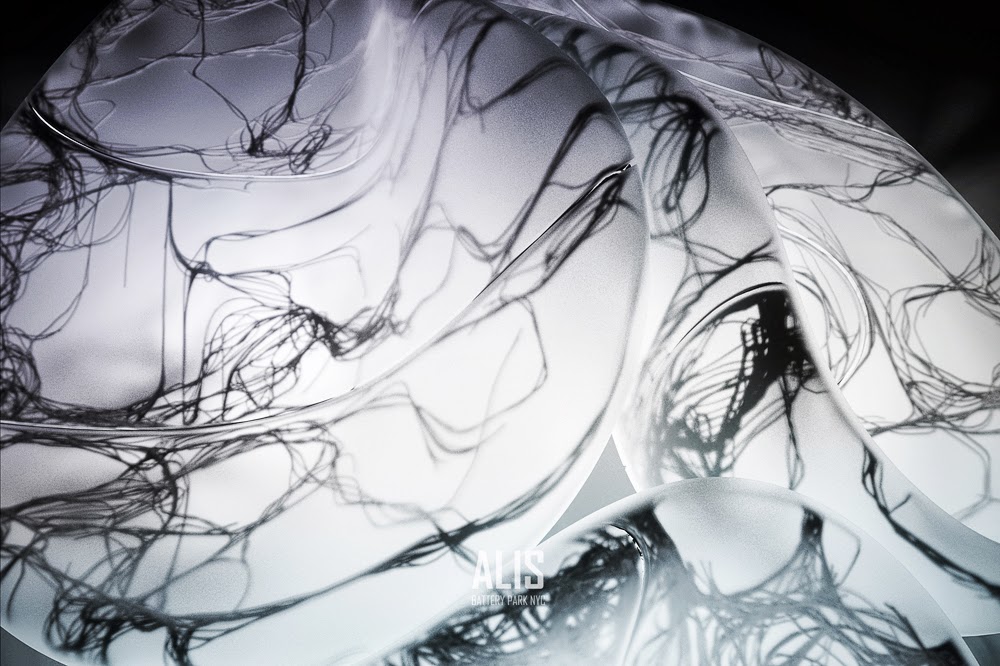
ALIS Battery Park Bench Competition Entry
Team: Edward Kim, Tommaso Casucci, Charles Jones, Mike Nesbit

Alis is a project proposal for a bench made in collaboration with Edward kim.
The bench structure is defined by a series of fiber composited surfaces that are then assembled. The fiber distribution define structural reinforcement to the surface integrated with the joints system.
The image of the bench changes dramatically from day to night due to the illumination from within the object that show the internal fiber structure during nightime.

find more info and images on exquisite website.


11.6.13

WS_Grasshopper for 3D printing

A new Co-de-iT workshop is out. This time is the turn of  "Grasshopper for 3D printing".

 
Firenze
9-21.07.2013
tutors: Andrea Graziano, Tommaso Casucci

the workshop will be the second collaboration between Co-de-iT, FABlab Firenze and Kentsrapper.

find the application forms and more info about the workshop at the Co-de-it webpage of the event.

28.5.13

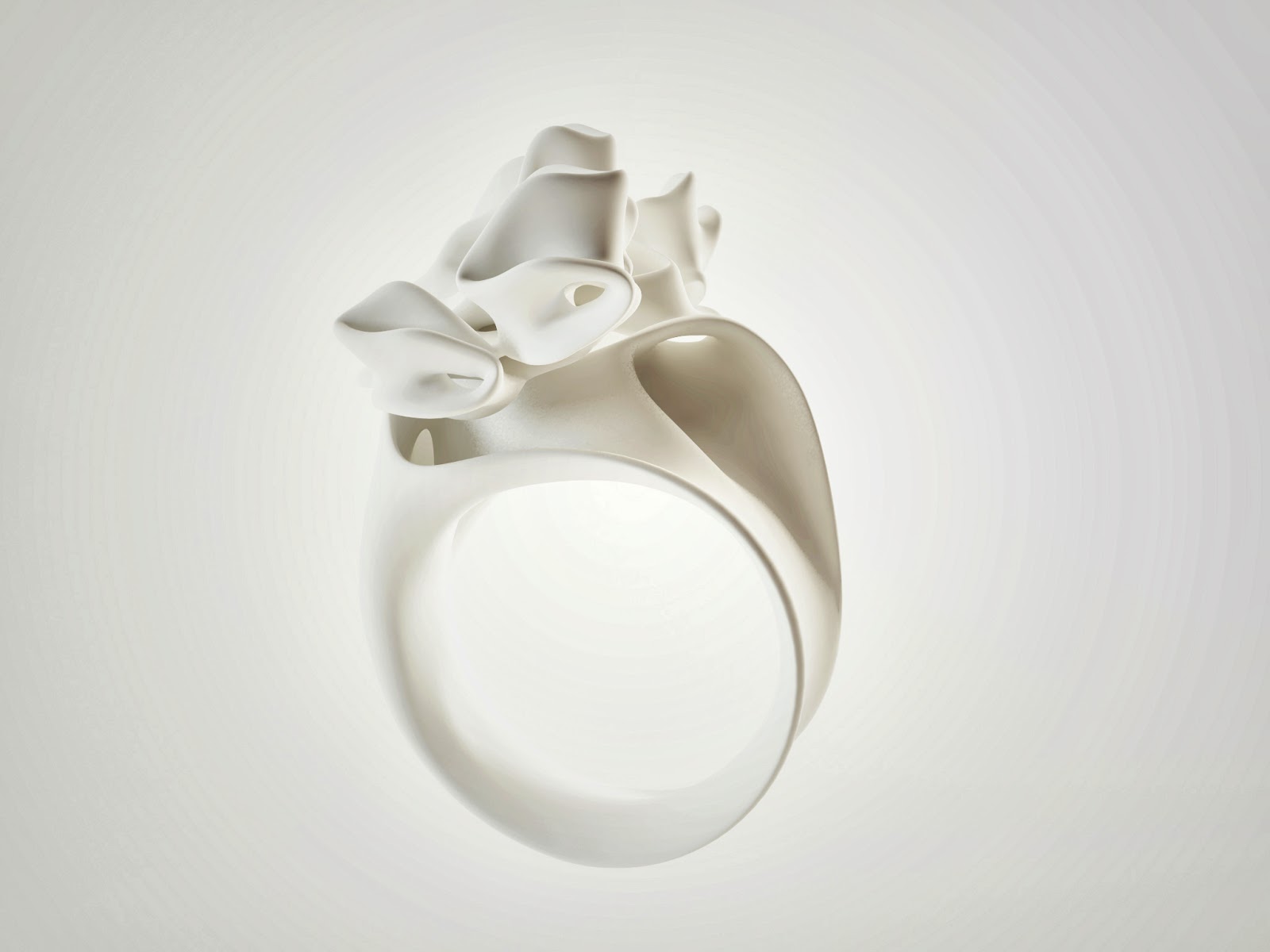
Ring_000_


5.5.13

Prototyping Maya - Fast track!


Next week I will be teaching togheter with Ludovico Lombardi of Zaha Hadid Architects to the Co-de-iT workshop "Prototyping Maya-Fast Track!".

The workshop will be an introduction to the animation and modeling software Autodesk Maya and will be aimed to devlope tridimentional morphologies ready to be 3Dprinted.

For this special event Co-de-it will be partner for the first time with FABlab Firenze and Kentsrtapper.

find all the application forms and more info about the workshop on the Co-de-it webpage of the event.

Below are some in progress versions of the cover.


9.4.13

coNNection<>coLLection


synth(e)tech togheter with co-de-it, disguincio&Co, niccolo casas design, dothemutation,
will be featured as coNNection<>coLLection at [re]vive during the Milan Design week 11-14 April 2013


2.9.12

Procedural matter

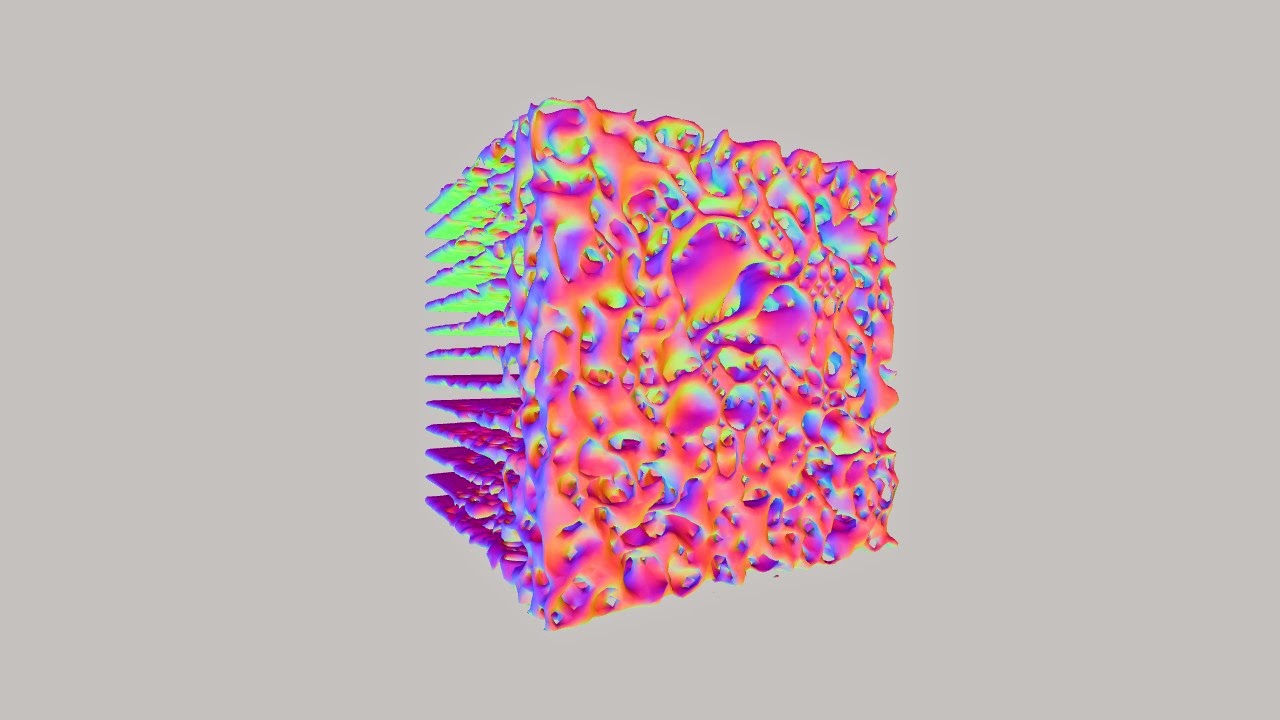
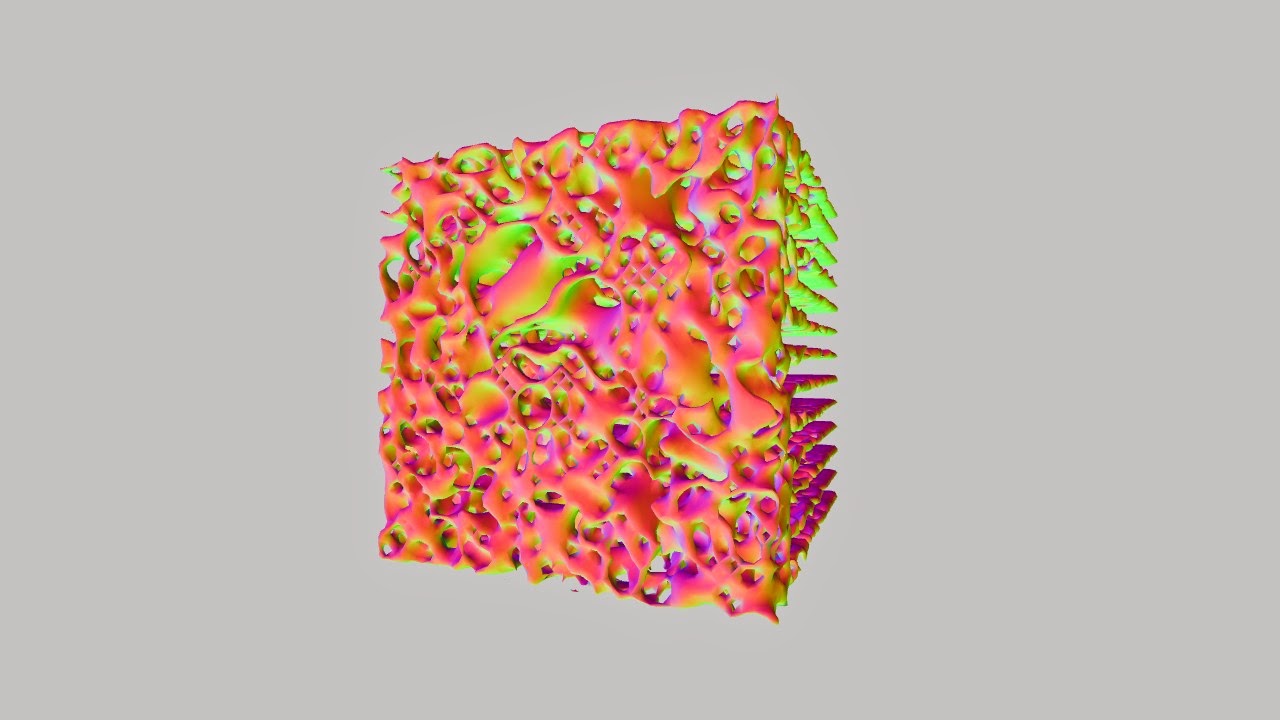
The following tests are intended to explore matter as a procedural model defined on the base of a set of  algorithmical rules to create seamless patterns whose parameters can be arbitrarily varied to match infinitely different conditions.

In this case not any physical phenomena is simulated but a set of abstract conditions are defined, in particular the use of procedural textures is explored.

Procedural textures are largely used in computer graphics to generate arbitrary resolution images and simulate representation of natural elements on the base of mathematical algorithms. Those textures was primarily studied by Ken Perlin during the eighties. His original noise code is dated 1983.

Below is a series of procedural 3D formations produced combining noise functions with other mathematical expressions. 


References:

code (noise original 1983 first version code)
Noise and Turbulence (introduction to perlin noise)
Perlin Noise (accurate description of noise functions)
echoechonoisenoise (amazing noise based design research by Dominik Strzelec)

19.8.12

Studies for a stair


Thıs project is a personal exploration that started by a real necessity of renovation of a friend’s house on the hills inTuscany near Cavriglia (Italy).

The existing building is going to be divided in two part to have two different apartment. The idea is that one of the two apartment will be used by a young couple, the other will be probabily be given for lease.

Except for a little work of redistribution of the existing spaces, the only new addıtıon is a new staircase that will serve one of the two apartment, while the other is going to use the existing  stair.

I was asked to devlope a proposal for the stair but since the first  moments was clear that the stair would be builted on the base of a different project that uses prefabricated components, for this reason I had some free space for exploration.

The initial studies was based on a single structure that englobe the pillar, the stairs and part of the floor of the first level of the house.

A first analysis phase consisted on the simulation of principal stresses distribution  inside a limited volume area, under the pressure of  loads derived from the use of the stair and the first level floor and definied a set of possible anchor points in the existing structure.

On the base of the three dimensional vector field describing the principal stresses distribution, the material proprieties of the stair, was defined through the use of an agent base strategies to mediate between agents behaviour and the vector field proprieties.

This process define a structure that is more dense and massive where the principal stresses have high values and became more fibrous and dematerialized where principal stresses registered are low.

The treatment of the exterior surface of the structure was also studied to create variation between smooth and coarse surface that could give a secure foothold to the user that are going up to the stair.  


20.7.12

SPECTRUM {EMBODIMENTS} - Processing Workshop


proto/e/co/logics – Rovinj _ 27-31.08.2012
Tutors: Alessio Erioli, Tommaso Casucci, Alessandro Zomparelli

.
Agency, embodiment, hierarchies.
The more we explore the architecture of matter, the more what we get looks more and more like information; yet, information needs a body in order to express itself as such. Architecture starts when the embodiment process takes place, from the set of relations that define a system, by defining relations among independent objects (which, in turn, are information systems on a finer scale). By coding the behavioral rules of interacting autonomous agents and topological manifolds, emergent hierarchies and differentiated yet coherently related spatial and geometric conditions flourish forming a spectrum (a condition that is not limited to a specific set of values but can vary infinitely within a continuum), with a cascade of local symmetries, gradients and singularities emerging from pure information systems.
The workshop will speculate through codes written in Processing on autonomy of form and the relation among behavioral rules and morphogenesis. Rather than trying to reductively solve dualities like autonomy/dependency, whole/parts, heterogeneity/homogeneity the workshop aims to exploit them as a fuel for dynamic, competitive or collaborative creation of higher complexity and the source of a spectrum of possibilities in finding novel seeable forms with no precedents.
We will write our own unconventional programming strategies in the scripting- framework Processing.

Supervision:
Alessio Erioli, Tommaso Casucci, Alessandro Zomparelli

Affiliations:
a collaboration between Co-de-iT and MLAUS / proto/e/co/logics


information and registration:
info@mlaus.net


15.7.12

theBush

hemesh is a 3D library for Processing for the creation and advanced manipulation of meshes by Frederik Vanhoutte.

here is a short test to explore some of the basic features of the library.

the branching structure is based on a simple random sedimentation ad searches for the closest point between the existing nodes of the frame.

you can download the code here.


Licenza Creative Commons
This opera is licensed under a Creative Commons Attribuzione 3.0 Unported License.